Software Quality Assurance (SQA) is the tool and practice used to monitor the processes and methods utilized for a software development project to ensure that the software is of sound quality. It can include ensuring compliance with ISO/IEC 9126 or SPICE or CMMI standards. It has standards and procedures which managers, managers, or even developing software products and activities can use to check and audit to verify that software complies with quality criteria linked to the standards.
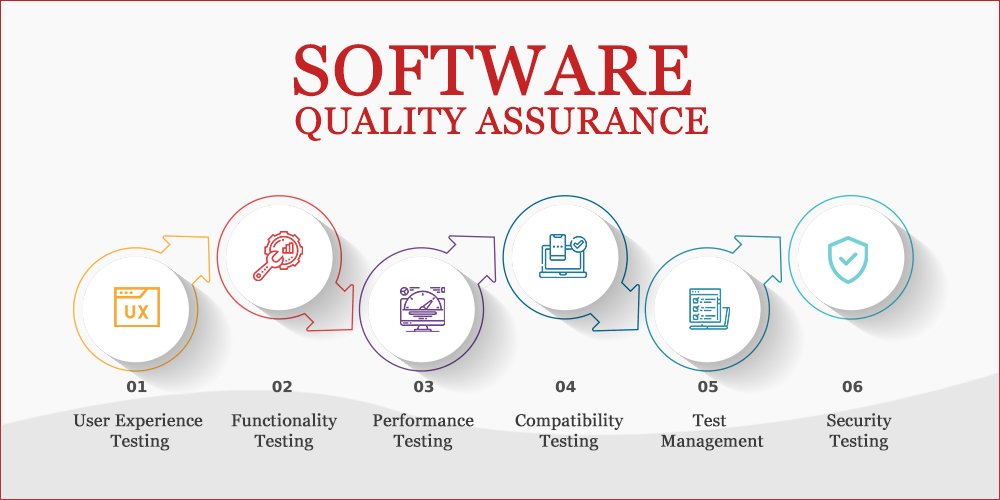
Software Quality Assurance(SQA) includes all software development processes from requirements definition, coding to releases. The ultimate objective is to supply the customer with a quality product.
A defined cycle is called the PDCA cycle or Deming cycle for quality assurance. This cycle has four phases: plan, do, verify, and take action.
Plan – The organization should plan and set process-related goals and determine strategies for delivering a high-quality product.
Do – Time to plan and to develop process tests. This phase could include updating strategies to enhance performance.
Check – Process monitor, modify the features and verify that the predetermined targets are achieved.
Act — Implement measures needed to improve the processes.
Why Does Software Quality Assurance Matter?
Companies must use a credible software quality assurance process to establish a basis for the product for the sake of the consumer and the software product itself.
You save time and money with a high-quality software product. Software quality assurance can confirm the worthy purchase of your goods or software. The problem with the product that doesn’t make a purchase is that you are losing money for the product, and if there is no profit, you don’t get a cup of that money back.
Benefits of Software Quality Assurance
- Improve the more precise quality of the product and up-to-date test statistics and tracking of defects.
- The detection of defects in the software project development cycle is found to have reduced rework costs at every stage beforehand.
- Existing product administration and future product development have increased confidence.
- Greater credibility will be very qualitative as the produced software.
- Save money.
- Inspire customers’ trust.
- Great User Experience is maintained.
- Bring more profit.
- Boost Clients Satisfaction.
What do you mean by Quality Assurance Framework?
In order to respond to the increasing focus on results of learning and the strategic objective of increasing the quality of training products and services. The Quality Assurance Framework (QAF) is a tool for validating the quality of training using the appropriate accreditation schemes. The QAF consisted of three main elements: a quality control commission, a set of standards and guidelines for quality assurance, and a self-assessment and peer review process.
The importance of a software quality assurance scheme is compromised by many sub-topics, including standards such as the ISO 9000 and the CMMI; the various SQA approaches such as defect management and attributes management. You will have everything you have learned to adapt well to implement software quality assurance for your company.
 Quality professionals